Father Gerard Jean-Juste
Kevin Pina recently interviewed legendary Haitian priest and human rights activist, Father Gerard Jean-Juste from Miami, Florida on the program Flashpoints heard on the Pacifica network. The following is a transcript of the interview made possible by Kevin Salinger.
Kevin Pina: Good afternoon, this is Kevin Pina with Flashpoints on Pacifica. Today's very special guest is my dear friend, and a man who has fought tirelessly for justice in Haiti, who has fought tirelessly for human rights in Haiti, Father Gerard Jean-Juste. Father Gerard Jean-Juste is currently in Miami, he is undergoing chemotherapy. He was, of course diagnosed with leukemia while he was being held without charges in a Haitian jail. He was tested by Doctor Paul Farmer, who then smuggled out his blood and diagnosed him with leukemia. Finally the US, United Nations-backed forces, the US-backed government, installed government of Gerard Latortue was forced to free Father Gerard Jean-Juste to allow him to begin his medical treatment. Father Gerard Jean-Juste, good afternoon, and welcome to Flashpoints.
Fr. Jean-Juste: Good afternoon Kevin, good afternoon to all the listeners of Flashpoints.
Kevin Pina: Well, now you've had a little bit of time, you've been in Miami. How are the treatments going Father, how are you feeling?
Fr. Jean-Juste: It has been improving for a while, and I feel better now. I thank God; I thank all of you for your prayers, and for your support. And also, I'm getting ready right now for the second cycle of chemotherapy treatment. I have about five more cycles left, so the first one went very well, and I hope the second one will go well too, and the other ones, so they hope within five months I may recuperate pretty good.
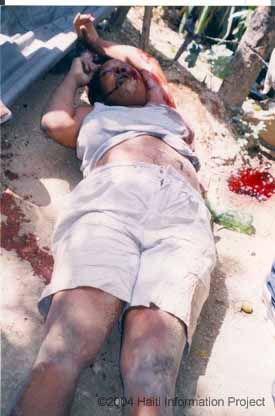
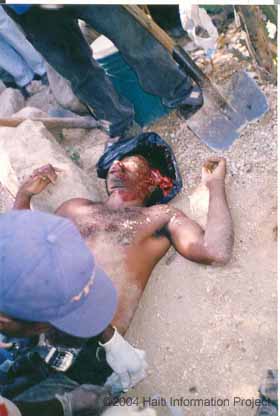
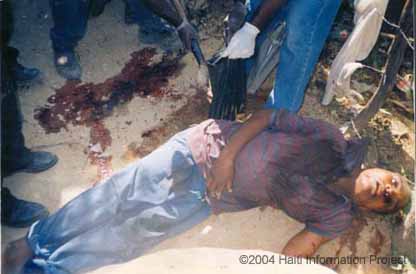
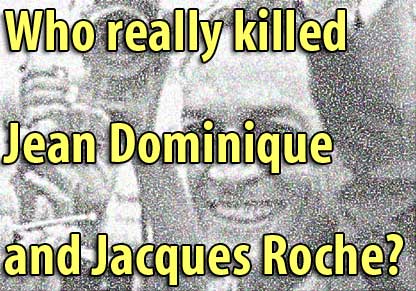
Kevin Pina: Now I know that, in theory, your case is still pending in Haiti, but I'd like to get into that a little bit, particularly in light of the fact that there's been a lot of talk lately by Reporters Without Borders, and by the widow of Jean Dominique lately, raising the question of Jean Dominique, in particular the involvement of Lavalas in the murder of Jean Dominique; and I can't help but think of the parallels, in that, you of course are accused of being involved in the kidnapping and the murder -- a preposterous accusation of course -- and the murder of Jacques Roche. Jacques Roche was a reporter who was, really, I guess a sort of slanted reporter, I guess there is another term for it, a reporter who worked with the Group 184, which was, of course, the opposition group that helped to oust President Jean-Bertrand Aristide on February 29, 2004. But Father, I don't think that we ever really heard from you. How did you feel when you first heard this preposterous accusation against you? I know you must have felt it was preposterous.
Fr. Jean-Juste: Definitely, definitely, it was ridiculous to charge me with such a preposterous accusation. I was in Miami on business, and then I returned to Haiti on the 15th, two days or three days after the Jacques Roche assassination. So I had nothing, absolutely nothing to do with Jacques Roche. Of course, now they are looking for a way to get rid of me, to shut my mouth, and also to stop Lavalas from participating in the election, in order for them to go to the elections and carry all the posts. But, unfortunately for them, and fortunately for us, within time the case of Jacques Roche has been dying -- inaudible -- because the search found nothing about us, they dropped the charges. But I would like to see Jacques Roche obtain justice, in the sense that they should try to find the true killers and go after them, and bring justice to the case. But now we have to ask the question: who was the true killers of Jacques Roche? Because it seems to me this is a political killing in order to capitalize, in order to benefit out of the exploitation of the death of Jacques Roche. And this is the beginning of what we call the "arming of ti machet." That was the first in a series where we've been attacked at the church, it was something plain, by some officers of the de facto government, and later on we discovered that the death squad was in full speed going after Lavalas people, even at the soccer game, organized, or sponsored by the USAID, where so many Lavalas people have been assassinated and killed in cold blood. So I guess there was a -- inaudible -- going on, and they were looking for a way to trap us Lavalas, and put everything on our back, and then get rid of Lavalas. So they have failed, Lavalas has survived, and now we hope we will keep moving forward, obtain justice, not only for myself, but for the other political prisoners, and for everyone else accused falsely in the case.
Kevin Pina: It seems so hard though to figure out the truth and to be able get justice, when people seem to politicize incidents like this, and use it as a tool of political persecution against those who are associated with Lavalas. Of course there's the most recent example of your own where you were not involved with Jacques Roche, but yet we know that the minister of culture under the Latortue government got up and accused you personally, accused Lavalas of involvement. Without any proof it was printed in the media, in the mainstream media and in the Haitian press, and there were very few questions raised as far as the validity of it until you were finally released when the charges were dropped. But I can't help but also think about the Jean Dominique case.
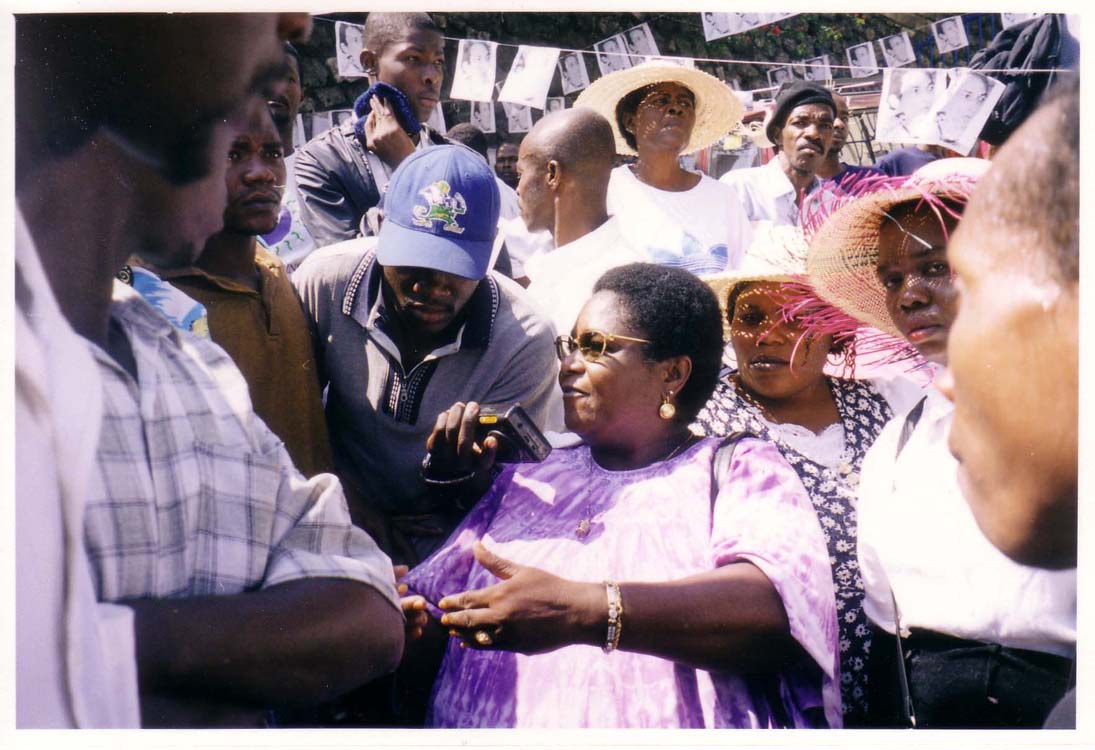 |
| ©2000 Michelle Karshan - Demonstration in memory of Jean Dominique at Radio Haiti Inter April 3, 2000 - Sò Anne participated in demonstration outside Radio Haiti Inter to protest the murder of Jean Dominique the day before. Reporters Without Borders aledged that Sò Anne played a role in the Dominique assassination, this is the first time that her name has ever come up as a "suspect." |
Fr. Jean-Juste: Yeah, it is unfortunate Kevin that in Haitian politics, some politician can do anything to blame, or to condemn the opponent, the adversaries. So, this is a very bad practice. It reminds me of the tactic on the international level, once in awhile we see that whenever they want to create a problem for a president, for a party, for a group, they manage to get somebody killed, and then they manage to blame some group they want to get rid of. In French we always say that -- speaking in French -- we say that whenever we want to get rid of somebody, just look for an alibi, look for a case we hear of murder, and put it on the back of the person, and then we make propaganda about it. So it is unfortunate. And in the case of Jean Dominique, Jean was a Lavalas, strong Lavalas, and helping the peasants, helping the poorest ones. And who should profit off the killing of Jean? Who should profit off getting rid of such a great journalist? You understand, so they use Jean to put pressure on the Lavalas government. It's like having a family, where someone will try to kill the son or the daughter of the family, and now try to blame the whole family for the killing. It is ridiculous. So in that sense, we are putting it so Jean Dominique could obtain justice. But I think that Reporters Without Borders is just using the case for their own purpose. Understand that the last three years we heard nothing about the case. Why is it now coming back again on the scene? It seems that every time a Lavalas, comes back- is running, they try to bring up something in order to stop the government of the people.
Kevin Pina: And of course Reporters Without Borders said absolutely nothing, or very little about this thing of Abdias Jean. You know we don't know, there's no clear evidence who killed Jean Dominique, but we know that there were eyewitnesses who say that the Haitian police summarily executed Abdias Jean in January 2005, in the neighborhood of Cite de Dieu. We know that for a fact.
Fr. Jean-Juste: Yeah, that's true. Unfortunately, this is the type of reporting we have coming from France. And understand that some French officials have been helping some Haitian students in order to make them rise against the Lavalas government all the time. And because President Aristide was apparently asking for France to repair it, to repair, to uh -
Kevin Pina: Give reparations.
Fr. Jean-Juste: - for reparations, and they [owe] 22 billion dollars to Haiti, and France refused, and in that case, I guess Reporters Sans Frontiers is trying to think ahead, to make us forget what we are looking for. We're looking for reparations, we're looking for restitution, and I think its about time that France stop- and deal frankly with the issue, otherwise, they cannot understand the issue. We're still alive, and probably after Jacques Chirac or some other government, we'll still continue to demand reparations and restitution, and we will gain justice someday.
Kevin Pina: Now you know, sometimes it almost seems like a cultural war for me. When I see the attacks, the character assassination on leadership of Lavalas, when I see the attempt to destroy the reputation of Lavalas, when I see the attempt to paint it with a wide brush stroke, that it was a violent movement at the behest of Jean-Bertrand Aristide, the dictator of Haiti, all of this sort of propaganda machine within culture. And a latest example is this film that was just released, which I haven't seen yet, but the main theme of it, its called Ghosts of Cite Soleil, its produced by the son of Jorgen Leth, Asgar Leth. Jorgen Leth of course was the former Danish honorary counsel to Haiti, who had to resign because he had written a book that detailed his sexual exploits with his 17-year-old house servant, and that created a very moral uproar and he had to resign from that position. But his son Asgar Leth now has produced a film called Ghosts of Cite Soleil, in which he now chronicles the exploits of two gang leaders in Cite Soleil called Tupac and Billy. And according to this film, there are these phone calls that are made reportedly, in this film, that say that they are being made by those close to Jean-Bertrand Aristide, who is getting leadership to the gangs in Cite Soleil to go out and kill the opposition. Father Gerard Jean-Juste, I've never asked you this question before: what is your opinion about the accusations that have been leveled against Jean-Bertrand Aristide, that he was using the state to sponsor violence against the opposition in Haiti?
Fr. Jean-Juste: Well its completely false, its completely propaganda, its completely unjust doing that to President Aristide. The president was elected by the people, the president was well-loved by the people, by most Haitians, as the president was being so good to the poorest ones in Haiti by offering education to everyone, regardless that the international community had stopped all aid, all assistance to President Aristide as well as President Preval in the past; and these presidents, loved by the people, had managed to offer maximum services to the people. And that is the reason that now we have so many people coming out, still supporting these Lavalas presidents. So I guess the enemy should take a lesson, instead of trying to destroy all those who want good for the grassroots, who want good for the people in general, who want good for everyone in general, rich or poor, who want possibilities for the poor, want - going after these good Haitians; and I think they should, instead, try to find ways to bring cooperation and help us better the life of the people. That's the way how I see it, but unfortunately we have a long way to go to make these people, to make the enemies of the Haitian people understand that. Its not the proper way to live, its not the proper way to operate, and they should come on the side of the people. So we hope with our prayers, with our discipline, we shall convince them, someday they will change. That's why hope, or otherwise I'll see why people who are educated, who are supposed to know better, will go in a way of -- inaudible -- that leads to the assassination of so many Haitian brothers and sisters. And President Aristide, he is loved by the Haitian people, not because he is President, or because he has done something great, its because he has shown complete love for the people. Poor people can enter the palace and eat with the president, and party with the president, as well as rich people. So President Aristide has been opening his arms and heart to everyone. So at the moment that the people have tasted this type of service, this type of offer coming from the president -
Kevin Pina: Open government.
Fr. Jean-Juste: - from the government -- you can do whatever you want, they will give their life for the movement, because the movement is in their advantage, giving them more dignity, and more hope, and improve their living. So that's the best way to operate. The best way to operate is completely to come with some services that allow people to receive basic human needs. So this is the best way, and you're going to have the Haitian people with you forever. But the other ways, exploiting them, killing them, and telling them nonsense -- they won't accept any of that nonsense.
Kevin Pina: You know Father, there seems to be a revision of history going on as well. People seem to be wanting to sweep under the rug what life has been like in Haiti the past two years, which I can only describe as a human rights hell. But I wonder if you could just help our listeners to understand, if you could describe, define what the last two years have been like in Haiti before the elections, after the coup against Aristide, February 29, 2004. How would you describe that period of history, Father.
Fr. Jean-Juste: Well as you just were referring, it was hell in Haiti, cause, imagine that we had a democratic government functioning, and in effect, within the international community, they come together and, with some putchist leaders, coup leaders, and they get rid of this elected president. And that has been quite a blow to us Haitians. So many innocent people have been killed for nothing, and the people who have survived have received no services at all, and all the public places that were built, to serve the people, to welcome them -- the parks, the public institutions in education, meant to serve the people -- everything has been either destroyed or disappeared. And so the de facto government that has been imposed on us the last two years has received more assistance from that sector of the international community -- from the international community at large, I should say -- and has done nothing for the people in concrete. Look at Haiti now: they are still without electricity, no woods, and no food for the people, and -- inaudible -- it's very expensive. And on the human rights level forget it. The jails are overcrowded with innocent people, most of them Lavalas people. And so this is a situation where they have tried to force a government in the throat of the people, and the people have stood up and thwarted them. So I think we have a great lesson today, and Haiti should never, never live such a sad, hellish moment, like we've had the last two years, in its history. So we have to find ways now to make democracy a growing, and find ways to make sure that human rights of all in Haiti are respected, and find ways to correct whatever wrong has been done by the previous de facto government, and move ahead to see if we can bring as many Haitians -- to bring them together, as many as possible, and to rebuild this beautiful country God has given us. So that's the way how I see it, because it is true that I'm not able to speak more, but you know, in the condition I'm now, I'm in the middle of treatment and I'm taking a lot of medication right now.
Kevin Pina: I understand Father. This is Kevin Pina on Flashpoints on Pacifica, our guest today is Father Gerard Jean-Juste. Now Father they've set you free to undergo chemotherapy for lymphatic leukemia, which of course is very dangerous. They had held you to the point where it had become life-threatening, and of course your treatment had to commence immediately. But technically you're still a political prisoner, because technically after your treatment you're supposed to return to Haiti. Is that right?
Fr. Jean-Juste: Yes, I'm looking forward to returning to Haiti. As far as my case is concerned, in order to send me for treatment the government wanted to pardon me. I said, what have I done to deserve a pardon? So I am the one who went on appeal. I'm going on appeal, and I would like to win the case all the way, all the way, and I won't back off until I receive justice from the government of Haiti, probably now would be under government under Preval administration, yeah.
Kevin Pina: Well I can't thank you enough Father Gerard Jean-Juste. God bless you sir and thank you so much for your time. Please take care.
Fr. Jean-Juste: Thank you very much Kevin. My greeting to all the listeners, and I hope God bless every one of us. Thank you.