Saturday, January 7, 2023

  Gibert Wesley Purdy

The Theater of Coup
Dramatis Personae: Who is Guy Philippe?

Thanks to CatalyzerJournal.com for this article
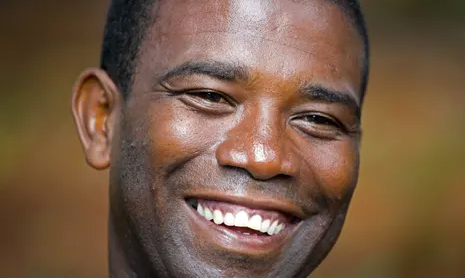


Ever since a small rebel force appeared from across the Haitian border with the Dominican Republic and took the city of Gonaives, the members of the various American media have been asking the question "Who is Guy Philippe?" Philippe is presented as the leader of the rebels. As they have taken one town after another, and turned their attention toward Port Au Prince, the capitol city of Haiti, he has held press conferences, acting as the porte-parole (spokesperson) for the group. He has proved surprisingly deft at both aspects of his dual role.

Like so many adventurers on the Haitian political scene he has become known, to Haiti insiders, for a patchwork of activities - the most recent being the present coup. Like so many, his allegiances are unclear from one day to the next. Having begun in the ranks of the Haitian army (the FAD'H), his work has been mostly for the right-wing of the political spectrum. The FAD'H's raison d'être was to enforce the will of the tiny elite of wealthy Haitians who ruled the country.

To his credit, it does not appear that he was ever a member of the infamous Front for the Advancement and Progress of Haiti (FRAPH). In an attempt to prevent any return to a popular government, after the first successful coup of Jean-Bertrand Aristide, in 1991, FRAPH was formed. During the presidency of Rauol Cedras, from 1991 to 1994, thousands were murdered by the organization. Sadly, the leadership of FRAPH had a particularly close relationship with U. S. Intelligence, which had infiltrated it, in its early stages, at the cost of facilitating the efforts of an organization it knew to be a right-wing death squad.

When the army was disbanded, upon the return of Aristide to office, in 1994, Philippe was made the chief-of-police of the Delmas section of Port-Au-Prince. It is unclear, by whose influence the appointment was accomplished. It is widely reported that he had been flown to Ecuador, after the first Aristide coup, in 1991, where he was trained by U. S. Intelligence Special Forces, and that U. S. officials recommended him for the position. During the period of time that he is alleged to have received the training, he met and married Nathalie Philippe, a United States citizen, in Ecuador.

He is alleged to have been brutal in his effort to police the Delmas slums. The claim does not come to much by itself. Haiti is a violent country. The good guys only tend to be less brutal than the bad. He was later made assistant-chief of Cap Hatien: a key port city in the north of the country.

It was late in the year 2000 that Guy Philippe embarked upon the path that would make him a well-known figure on the Haitian political scene. Haitian authorities discovered a group of ex-military officers in the midst of planning a coup. Many among the group were arrested. Among the members of the coup that managed to escape was the assistant chief of police Guy Philippe. He probably escaped over the border into the Dominican Republic where he has a brother and where the Haitian opposition group Democratic Convergence maintains a Dominican branch office.

Philippe was back in the news late the next year. On December 17th, 2001, shots were fired into the presidential palace of Jean-Bertrand Aristide. Security forces fired back and the perpetrators scattered. Neither President Aristide nor his family were harmed.

One of the perpetrators, Pierre Richardson, an ex-sergeant in the Haitian army, was captured as he tried to escape by car into the Dominican Republic. Under interrogation, he named his co-conspirators in what he himself admitted had been an attempted coup. Among the names he mentioned was that of Philippe. Also implicated, by Richardson, were: Antoine Saati, a millionaire U. S. citizen of Haitian descent; Albert Dorelien, at whose house the conspirators had allegedly gathered before the incident, and whose brother, Carl, a particularly virulent ex-member of FRAPH, was in hiding in the United States; a number of recently fired Haitian police chiefs; the U. S. military attaché in Haiti, Major Douyon; and the U. S. Chargé d'Affaires, Leslie Alexander. Richardson, Saati and a Col. Guy Francois were imprisoned awaiting trial. Warrants were issued for the other alleged participants not associated with the U. S. Embassy.

Antoine "Tony" Saati owns a candy manufacturing business headquartered in Miami, Florida. The U. S. Embassy, in Haiti, replied to his sister, Gina's, frantic calls with assurances that they would quietly work to have him released. They advised her not to speak with the media. After three weeks without results, she went public saying that Saati had been beaten and given cleaning fluid to drink. He was innocent, she asserted, and sure to die soon if not released to the U. S. authorities. Saati was free and back in Miami in a matter of days but Gina's impatience meant the story had made the transition from Haitian French to American English.

What didn't make it into the American press was the fact that Antoine is the brother of George Saati, the co-founder of the extreme right-wing Haitian party Movement for National Unity , known by its acronym MOUN, which is closely allied with the Democratic Convergence and the Group of 184 . George Saati also owns the Haitian manufacturing concern Simi Global Corporation and is wealthy in his own right. Antoine explained his arrest as a vendetta instigated by one Eddy Deeb against whom his brother was then taking civil action in the Haitian courts. It turns out that getting to know Guy Philippe will properly involve cameo appearances by many such figures as Antoine and George Saati.

The Democratic Convergence , the Group of 184 , and MOUN, for all intents and purposes, make up the opposition to popular government in Haiti. Their respective leaders - Evans Paul, Andre Apaid and George Saati - are the leadership of the opposition, with Apaid, an American citizen of Haitian descent, clearly having gained precedence over the others. These are each umbrella organizations which claim the membership of scores of Haitian non-government organizations (NGOs).

While some of the organizations under their umbrellas legitimately exist most are little more than registered names under which the opposition in the country can do business. The lists of such organizations under these umbrellas are intended to impress the uninitiated with the upswell of opposition, while, in fact, all of them taken together represent only a tiny minority of the population: the wealthy elites and their paid retinues, members of the leadership of the disbanded army, some few legitimate groups disaffected from Aristides Fanmil Lavalas party. Perhaps more to the point, they serve as entities by which U. S. taxpayers' money can be funneled to the political machine of the wealthy elite of Haiti via the U. S. Agency for International Development (USAID), the National Endowment for Democracy and the International Republican Institute.

"The Opposition" as they have recently been called in the American press, is closely advised by the International Republican Institute, in the United States. The IRI is chaired by Senator John McKain and is largely managed by high-level neo-conservative Republicans, many actively serving in the Congress of the United States. It is a private think tank that receives its funding from the U. S. taxpayer via the National Endowment for Democracy. The de facto executive committee of "The Opposition" is the Haiti Democracy Project, also an American NGO largely managed by high-level neo-conservative Republicans

Albert Dorelien's brother, Carl, was living in Port St. Lucie, Florida, at the time of the December 17th coup attempt. Carl, a colonel in the Haitian military, had been a participant in the first coup against Aristide in 1991, and a member of the Haitian team that negotiated the agreement, with Jimmy Carter and General Colin Powell, during the Clinton Administration, to restore Aristide to the presidency. In between, he was a member of the senior leadership of FRAPH. In 1995 he was exiled, by Aristide, to Spain. Shortly thereafter, he was openly living the United States by virtue of a visa he claimed, in an interview with the Boston Globe, to have received, before departing Haiti, from a Lt. Col. Steven Lovasz of the U. S. Army.

In June of 1997, while living in Port St. Lucie, Carl Dorelien was convicted, in absentia, of crimes against humanity perpetrated under his FRAPH command. He was sentenced to life in prison at hard labor. On June 28, 1997, he held one of two winning tickets for the Florida Lottery drawing, at which time he began to receive installments of $159,000 per year for 20 years. Florida's Haitian community objected to a convicted violator of human rights in Haiti receiving the lottery prize. The Florida Lottery Commission replied that it was simply its job to disburse the money to the winners. The U. S. Government was silent on the matter.

Not long after the December 17 coup attempt, he was arrested for having overstayed his visa, and became an inmate at the Krome Detention Center, in Miami. On January 28, 2003, after an extended court process, during which he sent letters to John Ashcroft, and other key government officials, claiming, among other things, that he had done work for U. S. Intelligence, he was repatriated to Haiti, and incarcerated in the National Prison, in Port Au Prince. Dorelien had gone public, in an attempt to leverage his release from Krome, posting the letters and other "supporting documents" on an Internet site. The site has since been stripped, along with its cache pages.

The day after Guy Philippe's rebels released the "political prisoners" from the National Prison, American reporter Kevin Pina reported, to the Radio Pacifica program Flashpoints, that he had observed Carl Dorelien "eating a cheese and ham omelet [on the patio of] the Hotel Montana" in Port Au Prince.

As for Philippe himself, he arrived by commercial airline in Quito, Ecuador, on December 18th, after a stopover in Panama. At 2:40 p.m., on December 25, he and his wife arrived by commercial airline in Santo Domingo, capitol city of the Dominican Republic. He was immediately recognized and his presence reported to the authorities. In a highly unusual move, General Fernando Cruz Mendez, director of the Dominican Republic's National Investigative unit, chose to proceed to the airport to arrest Philippe personally. The prisoner mysteriously escaped immediately after being taken into custody by Mendez.

President Hipolito Mejias, of the Dominican Republic, declared that the country would be a laughing stock if it did not recover Philippe. A manhunt was launched. He was captured, again, on the 27th, "at the house of a friend," in the town of Bonao, about 40 miles north of the capitol. There being no extradition treaty between Haiti and the Dominican Republic, he was allowed to remain at large until arrangements could be made to extradite him to Ecuador or Panama. In the end, he remained free inside the Dominican Republic, reportedly living in posh hotels and eating in the finest restaurants although he had no ascertainable means of support.

On January 12, 2002, President Aristide granted an interview to the Listin Diario, a Dominican newspaper. In it he confirmed a list of the persons then in the Dominican Republic that Haiti wished extradited for trial in the matter of the December 17 coup attempt. The list includes: Guy Philippe; Joseph Bagidi, an ex-police chief; Erar Abraham Goulos; George Saati, the brother of Antoine Saati; Guy Francois, now referred to as a Haitian businessman living in Santiago, Chile; and Paul Arcelen, the representative of the Democratic Convergence in the Dominican Republic.

Throughout 2002 there seems to have been little opportunity for adventurers of the armed sort and little is known about the activities of Philippe. The Opposition had created several new front groups to be self-appointed "official observers" of the 2000 election and had all too predictably discovered a range of irregularities. Through their American handlers they had managed to have their "findings" put before the Organization of American States (OAS). The matter was being hashed out during 2002 and a strategy being unfolded.

The Opposition had been assisted by their American handlers in assembling a media machine, as well. Talk radio hosts, newspapers and web-sites had emblazoned the news that "official observers" had declared the elections corrupt and would continue to repeat the story until the coup of February 2004. Members of the IRI and the HDP, and unaffiliated journalists simply too lazy to ascertain the truth of the matter, transferred the claims into the U. S. media as established fact. The Rush Limbaugh school of journalism was actively molding American public opinion in preparation for the time it would be called upon to welcome the ouster of the thug and tyrant Aristide.

The OAS sought to mediate - its point man being U.S. Assistant Secretary General, Luigi Einaudi - and adopted a resolution in which a Provisional Electoral Council was established, upon which both the massively popular government and the tiny combined opposition would serve. Both would have to sign-off in order for elections to proceed. From that point forward, The Opposition refused to sign-off on any election so long as Aristide remained president. At the time of the February 2004 coup, there were many elective offices vacant in the country. Aristide was blamed personally for the resulting failures of government services, for the failure to hold elections and for trying to rule as a dictator. The U.S. media dutifully reported the allegations without providing context.

On May 7, 2003, the hydro-power plant at Peligre, in Haiti's Central Plateau region, was attacked. Two power plant operators were killed and the plant set on fire. The city of Port Au Prince and much of the rest of the country lost power. The perpetrators escaped across the plateau and the Dominican border, wounding two police officers during the ensuing chase. The plateau had recently become a violent place. The attacks always ended in a race to the Dominican border.

As it turns out, the day before, on May 6, Guy Philippe and a group of Haitians, were arrested in the Dominican town of Dajabon, just over the border from the Central Plateau region. The group included: Paul Arcelin, the representative of the Democratic Convergence in the Dominican Republic; Bonivel Alcegard, a Port Au Prince banker; Presler Toussaint, an ex-inspecteur at the Haitian police academy; and Hans Jermain, an ex-member of the Haitian military. The group was reportedly arrested on suspicion of plotting against the Haitian government. They were reportedly held overnight, while the Peligre incident occurred, and were released the next morning for lack of evidence. Philippe told the press that they had merely met for an innocent reunion of old friends.

On May 9, 2003, an American missionary, James Glenn White, was arrested in Gonaives. According to the Haitian spokesman, Mario Dupuy, he was charged with receiving a shipment of assault rifles, grenade launchers, ammunition and other military equipment. According to White, he was arrested for receiving shipment of an AR-15 sport rifle, and a set of fatigues reading "God's Army," as a favor to a friend. According to everyone, the items arrived packaged inside a refrigerator. American Christians of every persuasion prayed for White's liberation from the horrifying conditions of the prison of that tyrant Aristide. White was fined $1000 and deported.

Throughout the summer, some 25 to 50 people would be killed in attacks in the Central Plateau region. On July 25, a delegation from the Haitian Interior Ministry attended a ceremony near the Dominican border. The delegation was ambushed as it left to return to Port Au Prince. Four were killed and one seriously wounded, according to the Associated Press. On July 31, Victor Beniot and Paul Denis, spokesman, and leaders, of the Democratic Convergence , announced that "All Convergence members and supporters must rally to overthrow the constitutional authorities."

In the months that followed, The Opposition organized protest marches in every corner of the country. The marches were designed to be a provocative as possible. Counter marchers and/or bystanders were taunted - often by acts of violence. When the police arrived to intervene, the Opposition media machine announced that Aristide had brutally put down demonstrations against his government. It was yet another indication that he had become a dictator. For all of its efforts, however, The Opposition still could not begin to approach Aristide's popularity with the electorate.

In early February, another demonstration was organized in Gonaives. It was quite small and led by a former FRAPH enforcer. A battle ensued. Blood was shed. On February 5, Guy Philippe arrived with a band of some 300 "patriots," armed with M-16s and grenade launchers, to restore the peace. By some reports, they arrived in light-armored personnel carriers and wearing spiffy new fatigues. Some wore body armor. After "liberating" Gonaives from that tyrant Aristide, they went on to "liberate" the north of the country.

President Aristide appealed to the U.S. government and the international community to come to the rescue of the constitutional government of Haiti. Aristide having, by all accounts, descended to a thug and a tyrant, the Bush administration could find no enthusiasm for dispatching military aid. They did, however, provide a flight out of the country and the hemisphere. Once Aristide was gone, U.S. troops were sent to keep the peace and to protect American interests. Philippe and his men proceeded to Port Au Prince where they spent several "free days" terrorizing and killing members and supporters of Aristides Fanmil Lavalas party and destroying their resources.
------------------------------------------------------------------------
Gilbert Wesley Purdy's work in poetry, prose and translation, has appeared in many journals, paper and electronic, including: Jacket Magazine (Australia); Poetry International (San Diego State University); Grand Street; SLANT (University of Central Arkansas); Orbis (UK); XS; Eclectica; and The Danforth Review (Can.). His work in journalism has appeared in The Schenectady Gazette, The Source (Albany, N.Y.) and the Eye on Saratoga. Query to gwpurdy@yahoo.com.

Saturday, September 4, 2021

Dekantasyon August 28, 2021 with Frantz Jerome, Kevin Pina and featuring KAFENOL from Montreal.

 Dekantasyon is a bilingual program in Kreyol & English co-produced by Frantz Jerome and Kevin Pina featuring KAFENOL from Montreal that provides news and analysis of events and politics in Haiti. 

On today's show we look at the branding of aid to Haiti by politicians, charities, NGOs and even gangs trying to rehabilitate their image. 


Dekantasyon August 21, 2021 with Frantz Jerome, Kevin Pina and featuring KAFENOL from Montreal.

Dekantasyon is a bilingual program in Kreyol & English co-produced by Frantz Jerome and Kevin Pina featuring KAFENOL from Montreal that provides news and analysis of events and politics in Haiti. 


On today's show we focus on non-profits, NGOs and charities providing aid to Haiti's south following a major earthquake there last week.


Saturday, August 14, 2021

DEKANTASYON: Deconstructing events in #Haiti - AUGUST 14, 2021 with Frantz Jerome, Kevin Pina & KAFENOL


click on GIF for audio player


On today's show we discuss the impact and response to the 7.2 earthquake that struck southern Haiti earlier today.

DEKANTASYON: Deconstructing events in #Haiti - August 7, 2021 with Frantz Jerome, Kevin Pina & KAFENOL


Click GIF for program audio

Thursday, August 5, 2021

DEKANTASYON: Deconstructing events in #Haiti - June 19, 2021 with Frantz Jerome, Kevin Pina & `KAFENOL


click on GIF for audio player


DEKANTASYON: Deconstructing events in #Haiti - July 31, 2021 with Frantz Jerome, Kevin Pina & KAFENOL

 Click on GIF for audio player


A deep dive into the assassination of president Jovenel Moise the details, the players and the outcome.

Sunday, August 1, 2021

DEKANTASYON: Deconstructing events in #Haiti - July 24, 2021 with Frantz Jerome, Kevin Pina & `KAFENOL

                                                             click on GIF for audio player


On today's show we discuss the relationship of the 2004 coup and the assassination of Jovenel Moise in #Haiti. How the 2004 coup is THE context for events unfolding in Haiti.

DEKANTASYON: Deconstructing events in #Haiti - July 17, 2021 with Frantz Jerome, Kevin Pina & `KAFENOL

                                                       Click GIF to start audio player


Update on Core Group's reversal and appointment of Ariel Henry to replace Claude Joseph as Haiti's PM. 

DEKANTASYON: Deconstructing events in #Haiti - July 10, 2021 with Frantz Jerome, Kevin Pina & `KAFENOL


Click on GIF for audio program

We devote the entire hour to the assassination of President Jovenel Moise in #Haiti.


Sunday, July 18, 2021

CIA recruitment program from trainees in Haiti's police jumpstarted in 1996: "Separating Cops, Spies" by Sam Skolnik

 ORIGINAL LINK (now defunct): http://www.us.net/cip/icitap2.htm


Separating Cops, Spies
March 1, 1999
--------------------------------------------------------------------------------
An investigative article by Sam Skolnik, senior reporter, Legal Times.
The Legal Times is the premier weekly newspaper paper on law and lobbying in
Washington. Subscriptions are available at:
Legal Times
1730 M Street, N.W.
Washington, D.C. 20036


The former director of the Justice Department program that trains foreign
police officers has alleged that she was forced from her post after raising
concerns that department officials refused to protect her office's law
enforcement mission from possible CIA encroachment.

Janice Stromsem, until last month director of the International Criminal
Investigative Training Assistance Program, has filed a grievance with the
department's equal employment opportunity office, claiming that her efforts
to implement a policy preventing ICITAP's staff from engaging in
intelligence activities resulted in her ultimately being removed from her
job.

The ICITAP program has spawned several complaints from disgruntled
employees. But the issues raised by Stromsem are especially sensitive, given
Cold War-era concerns about keeping domestic law enforcement free of
international espionage.

That historic divide is a flashpoint at ICITAP, a 13-year-old program whose
staffers work to win trust among newly emerging, often unstable democracies
many of which have been of great interest to American intelligence in the
past.

The line between law enforcement and intelligence has been blurring in
recent years, causing tensions among U.S. government agencies. The most
recent: allegations that U.N. weapons inspectors in Iraq were working in
concert with the CIA.

Stromsem filed her EEO action in December 1998, but the underlying incident
at the heart of her grievance dates back to 1996.

That year, she claims, her efforts to implement a policy walling ICITAP
staffers off from intelligence-gathering activities was rejected by Mark
Richard, a powerful career attorney in the department's Criminal Division.
In the fall of 1998, Stromsem claims, she was contacted about the matter by
the office of Inspector General Michael Bromwich, which has been probing a
series of allegations of misconduct at ICITAP and its sister office, the
Office of Professional Development and Training (OPDAT), which trains
foreign prosecutors. Stromsem told Bromwich about the aborted
anti-intelligence policy, and provided documents to back her claim,
according to her attorney, Irving Kator of D.C.'s Kator, Scott & Parks.

Following that contact, Bromwich called in Richard, according to Kator. Soon
after that meeting, Stromsem was told she would be leaving ICITAP, Kator
contends.


Holder Denies Connection

In an interview late last week, Deputy Attorney General Eric Holder Jr. said
that there was no cause and effect involved in Stromsem's departure from the
ICITAP program. "Bottom line, there was no linkage between the IG investigation and Janice
Stromsem's removal," Holder says.

Asked the department's view on whether programs like ICITAP should ever be
open to intelligence agency participation, Holder says: "We cannot comment
on intelligence activities [regarding ICITAP], no matter how unfounded the
allegations might be. We reaffirm the exclusive mission of ICITAP is
international training and nation building."

Stromsem, now an official at the Global Bureau of the U.S. Agency for
International Development (AID), and Richard both decline comment.

A CIA spokeswoman also declines comment.

One U.S. government official, who asks not to be identified, says that "the
CIA is not in any way involved in [ICITAP]. If you were to report that, you
would be wrong."


Recruiting in Haiti

Stromsem is not the only one who has voiced concerns that intelligence
agents have sought to infiltrate ICITAP, a $25 million operation with some
40 staffers fanned out across the Caribbean, Latin America, the former
Soviet Union, and Eastern Europe.

According to four former ICITAP staffers and one State Department official,
the CIA has from time to time sought to recruit staffers, contractors, and
trainees affiliated with the program in countries such as Haiti and El
Salvador, where ICITAP has trained thousands of police officers.

One former ICITAP contractor in Haiti says bluntly that he and other
instructors were informed by students "that they were solicited by U.S.
intelligence services."

Charles Allen, a legal adviser to the Richardson, Texas, police department
who worked for ICITAP in 1995, says the practice, in which intelligence
agents would approach the students during off hours and weekends to try to
recruit them, "was wrong."

"When we went to Haiti, we went with the understanding that the country had
never had a democratic government or civilian police force,"says Allen.
Intelligence recruiting was "not good for those cadets, not good for Haiti,
and not good for the program. We were to make civilian police out of them,
not spies."

Further, The Nation magazine reported in February 1996 that the CIA had
placed agents in the Haitian National Police, which was rebuilt after the
1994 U.S. invasion and the installment of Washington-backed ruler
Jean-Bertrand Aristide. The magazine reported that those CIA recruitments
took place during ICITAP training at Fort Leonard Wood, Mo.

There was no specific ICITAP policy in place to prevent them from doing so.

In late 1995, Stromsem decided to write a policy that would set in stone
what had been an unwritten rule prohibiting ICITAP staffers from
communicating with agents of the CIA, the Defense Intelligence Agency, or
any other covert intelligence gathering group.

"It is critical for the credibility of the program and for the legitimacy of
U.S. Government efforts in overseas police reform that ICITAP personnel and
contractors be exclusively dedicated to fulfilling ICITAP's mission goals
and objectives,"states the executive summary of the proposal, a copy of
which was obtained by Legal Times. "It is manifestly evident that any
connection between representatives of ICITAP and any internal intelligence
gathering organization would be detrimental to our mission, and would be an
especially sensitive issue with many countries with which we expect to be
dealing in the future."

The proposal also contended that the Foreign Assistance Act of 1960
specifies that no foreign aid money can be used to provide assistance to
U.S. intelligence agencies.

Though it is a Justice Department program, ICITAP receives most of its funds
from the State Department, i.e., from foreign assistance money.


Proposal Rejected

Stromsem presented the proposed initiative to Richard in March 1996,
according to internal DOJ memorandums.

But Richard, then Stromsem's supervisor, wrote to her on April 25, 1996,
saying, "I have serious concerns about this statement and do not want to see
it moved on without further discussions,"according to an internal DOJ
document.

Richard's decision to nix the proposal was firmed up in a meeting the
following day, according to two participants in the meeting, which included
Richard, Stromsem, and at least three other Criminal Division officials.

Richard said he did not want to preclude putting ICITAP resources at the
disposal of intelligence agencies including the CIA when needed, according to
the two participants, who asked not to be named.

In a Jan. 7, 1999, letter to Deputy Attorney General Holder, Stromsem's
attorney wrote that "[Stromsem] was surprised when Mark Richard . . .
refused to approve the memo. Consequently, the directive was never
transmitted to ICITAP staff and the issue of the use of ICITAP employees for
intelligence work was never dealt with directly."

Kator claims that despite Stromsem's positive job appraisals, Richard forced
her out of ICITAP after four years at its helm, denied her a raise she is
owed, and bad-mouthed her to potential new employers.

Kator says he has received no reply to his letter to Holder. A senior
Justice official says that Holder did respond to Kator in January, adding
that the letter was forwarded to the IG, in accordance with standard
procedure.

Bromwich is apparently interested in probing the question of alleged CIA
involvement in ICITAP, according to two government officials who have been
questioned by the inspector general's office. The officials say his
investigators first raised the issue with them.

Paul Martin, a spokesman for the inspector general, declines comment on the
status of the investigation.

Despite her earlier whistleblowing on the CIA infiltrating Haiti's
police, Stromsem would later collaborate with the Boulos funded 
Haiti Democracy Project (HDP) that was instrumental
in the propaganda campaign waged against
Lavalas and Aristide used to justify the 2004 coup
.


Stromsem Investigated

Stromsem (who Kator says will also likely file a whistleblower complaint
soon at the Office of Special Counsel) may herself be a target of the IG's
inquiry.

Although no actions have been taken against her as a result of the
wide-ranging ICITAP probe, Stromsem, according to three Justice officials
familiar with the matter, may be under investigation for relatively minor
allegations of workplace harassment and other charges.

(Stemming largely from the complaints of a pair of whistleblowers, the
inquiry has grown significantly in the last two years and involves
allegations ranging from security breaches to contracting abuses to visa
fraud to hiring irregularities and workplace harassment. (See "Blowing
Whistles at DOJ,"Sept. 21, 1998, Page 2.) The investigation was first
reported by Insight, a weekly news magazine published by The Washington
Times Corp., in September 1997.)

Stromsem does have at least one high-powered backer, however. Sen. Edward
Kennedy (D-Mass.) wrote Holder on Jan. 19, urging him to take the necessary
steps to ensure that Stromsem is treated fairly.

And at least one official at the State Department supports many of
Stromsem's claims.

"As much as we wanted her to continue on as ICITAP director, it was clear
they were making life difficult for her at Justice," says the official, who
asks not to be named. "Jan has the complete and absolute confidence of the
State Department and AID."


Policy Debated

Kate Martin, director of the Center for National Security Studies, a civil
liberties group, says Richard and other higher-ups at Justice may have
concluded that in the larger national interests of fighting terrorism and
international drug smuggling, it is necessary to keep open the option of
allowing the CIA into programs that on their face have nothing to do with
intelligence gathering.

But Martin warns that there can be "all sorts of terrible effects" when
intelligence agencies are allowed to recruit in programs like ICITAP.

"It can be positively detrimental to the rule of law in countries that for
the first time are trying to build their own intelligence agencies and do
away with the legacies of secret police,"Martin says. She adds that the
suspicion of CIA involvement "is best addressed by the U.S. government being
forthright. It's best to draw a bright line."

Two former ICITAP staffers, who ask not to be identified, concur.

"I didn't sign up to work for the CIA,"says one former staffer. Richard's
decision to reject the intelligence policy "conceptually subverted the need
for an ICITAP."

Former intelligence community officials say, however, that if the CIA has
attempted to gather intelligence or recruit agents through ICITAP, it likely
had good reasons to do so.

Stewart Baker, general counsel of the National Security Agency from 1992 to
1994, says that it's generally not unhealthy for law enforcement and the
intelligence community to be working more closely.

"That's a Cold War notion, that intelligence gathering is dark and dirty,
and law enforcement is just about catching crooks. That world is gone,"says
Baker, a partner at D.C.'s Steptoe & Johnson.

Jeffrey Smith, general counsel of the CIA from 1995 to 1996, and his
predecessor, Elizabeth Rindskopf, decline comment on the allegations
surrounding ICITAP.

But they note that they worked with the general counsel of the Peace Corps
to ensure adherence to the corps' rigid policy of walling off CIA contacts.
(Stromsem used the Peace Corps model in developing her policy proposal,
according to one ex-ICITAP employee.)

Regarding the Peace Corps, "We bent over backwards there to make sure we
were very correct," says Rindskopf, who is of counsel at the D.C. office of
St. Louis' Bryan Cave. "It seems to me to be the wise policy."


Richard Close to Reno, CIA

Whatever the propriety of the policy or lack thereof, there is little
question that Stromsem's allegations are having an impact at the
department--in no small part because they involve one of its most powerful
and important behind-the-scenes players. 

Richard has several adamant defenders, both inside and outside the department. 
Even members of the civil liberties community say he is a smart
and honorable prosecutor.

Richard, a Brooklyn native who has spent more than 30 years at the
department, reportedly has the ear of Attorney General Janet Reno.

"Mark Richard has been a longtime official of DOJ,"says Holder. "I've known
him for 23 years. He's a totally dedicated, selfless public servant."

He also has friends in the intelligence community. In fact, he is regarded
as one of Justice's top experts on intelligence, having co-written a report
with Rindskopf, the former CIA general counsel, in May 1995 on improving
ties between Main Justice and the CIA.

Some of his detractors at the department say quietly that Richard carries
the water at Justice for the Langley spymasters.

But Smith, the former CIA general counsel, disagrees.

"Believe me, when I was out there, he took some skin off my back,"says
Smith, now a partner at D.C.'s Arnold & Porter. "He has no problem sticking
up for the Justice Department."


Richard's Duties Change

Richard is recovering from lung surgery and is now working part time; his
supervisors expect him to resume full-time duties before too long. But his
portfolio has changed. According to an internal department memo dated Jan.
26, Criminal Division Assistant Attorney General James Robinson has assumed
direct oversight responsibility over ICITAP and OPDAT--taking them away from
Richard. 

The Jan. 26 memo came less than three weeks after Kator's letter
landed on Eric Holder's desk. Richard Rossman, chief of staff to AAG Robinson, 
says Stromsem's departure from ICITAP and Richard's removal from the program's 
oversight are not related to the IG investigation.

"I can assure you that the IG investigation had nothing to do with these
decisions,"says Rossman. "That, I'm adamant about."

Robinson, Rossman says, is interested in education programs, having served
as dean at Wayne State University Law School in Detroit before coming to
Justice, and came up with the idea of taking charge of the policing programs
on his own.

What's more, says Rossman, "the whole international training thing is
mushrooming into an important part of what we do here."

In fact, international police training long predates the appearance of
ICITAP in 1986. And there may be some cautionary lessons there for the
department.

In 1962, Congress created the Office of Public Safety as an adjunct to AID
to formally incorporate police assistance into foreign aid programs.

In 1974, Congress terminated that program amid charges that U.S. trainers
condoned the use of police brutality and torture and were too closely
identified with the CIA.

Saturday, July 3, 2021

DEKANTASYON: Deconstructing events in #Haiti - July 03, 2021 with Frantz Jerome, Kevin Pina & `KAFENOL


click on gif for audio player


On today's show we discuss the hypocrisy and role of Reginald Boulos, the assassination of Antoinette Duclair and Diego Charles, the recent armed protest led by former policeman Jimmy Cherizier aka Barbecue and the G9 confederation of gangs and much more. 

Saturday, June 19, 2021

DEKANTASYON: Deconstructing events in #Haiti - June 12, 2021 with Frantz Jerome, Kevin Pina & KAFENOL


Click GIF for program audio


More tales of corruption and government violence in Haiti. A discussion of different tendencies in the Haiti's opposition.

Sunday, June 6, 2021

DEKANTASYON: Deconstructing events in #Haiti - June 5, 2021 with Frantz Jerome, Kevin Pina, Orlando Aupont & KAFENOL


click on GIF for audio player

On today's show we discuss the violence in Martissant,  where gangs are fighting over the lucrative spoils of corruption in Haiti and more.

Tuesday, June 1, 2021

DEKANTASYON: Deconstructing events in #Haiti - May 29, 2021 with Frantz Jerome, Kevin Pina & KAFENOL


Click on GIF for audio player


Haitians protests illegal constitutional referendum in US, France and Canada. The origins of The Little Machete Army in #Haiti and the #PHTK regime of Jovenel Moise. Who is Gonzague Day and why is trying to impress his infamous Duvalierist father?

Saturday, May 22, 2021

DEKANTASYON: Deconstructing events in #Haiti - May 22, 2021 with Frantz Jerome, Kevin Pina & our special guest Farah Juste


Click GIF to play program

On today's DEKANTASYON we visit protests in France and New York by the Haitian diaspora against the June 27th referendum to change Haiti's constitution being pushed by the #PHTK government of Jovenel Moise.  Gang leader Jimmy Cherizier, aka BBQ, has offered to provide security for the referendum in Port au Prince stating, "We either have a referendum to change the constitution or we have a civil war"! We also look at Columbia's attempt to use Haiti to improve the image of its police who have been going on a killing spree against anti-government protests in its own country. Finally, we're joined by legendary singer and activist Farah Juste for a discussion about events in Haiti.

Monday, May 17, 2021

DEKANTASYON: Deconstructing events in #Haiti - May 15, 2021 with Frantz Jerome, KAFENOL & Kevin Pina

Click on GIF for audio program

Remittances in Haiti reach an all time high, new commission to solve ongoing crisis in Haiti backed by so-called "international community", progressive organizations in the Dominican Republic declare former PHTK president Michel Martelly persona non grata a day before he plays at Hard Rock in Santo Domingo. We're also joined by Tony Jean-Thenor with Veye-Yo, an organization for Haitian rights founded by Father Gerard Jean-Juste in Miami, Florida.

Monday, May 10, 2021

DEKANTASYON: Deconstructing events in #Haiti - May 8, 2021 with Frantz Jerome, KAFENOL & Kevin Pina


 Click GIF to start audio player


Juan Gabriel Valdes has no right to opinion on #Haiti given his role in the 2004 coup and more.

Monday, May 3, 2021

DEKANTASYON: Deconstructing events in #Haiti - April 24, 2021 with Maud Jean-Michel

 Click GIF to start audio player

Wednesday, March 10, 2021

Fanmi Lavalas calls for “Sali Piblik” in #Haiti


ORIGINAL ARTICLE: https://haitisolidarity.net/fanmi-lavalas-calls-for-sali-piblik/

Fanmi Lavalas supports the masses of the Haitian people in their call for “Sali Piblik” or a people’s government of public safety in opposition to an oligarchy backed by the US, UN and OAS determined to perpetuate a system of exclusion. Watch this short video with english voice-over [english trans. by Haiti Action Committee] to learn more.

English text:

Feb. 14, 2021 over 100,000 denounce Jovenel Moise dictatorship in Port-au-Prince

Fanmi Lavalas Political Organization fully supports the people of Haiti who say that the system is totally broken. Our people are calling for an executive and a government that guarantees the public’s safety. Why Public Safety?

It is clear to all that the three branches of government have collapsed. The order of the day corruption, organized crime, impunity, theft, plunder, social exclusion, miserable living conditions and desperation. The executive, legislative and judiciary have come together as one to crush the Haitian people. People have absolutely no trust in this government.

Fanmi Lavalas published a document titled “Crisis and Solution” on November 15, 2018. We stated that, after the resignation of Jovenel Moise (indicted president) who was imposed as a result of the 2016 electoral coup d’etat, there will have to be a new executive and a government of public safety to make the transition. Which individuals will lead the transition? They will be people who are honest and credible; they are in the country. People who believe in transparency, in the struggle against social exclusion, corruption, people who believe in a different form of governance. They will restore trust between the people and the state.

Let us look at some of the major steps that the transition government will have to take:
1) Improve the living conditions of the population through an effective management of state resources
2) Create proper conditions for the legal case regarding the PetroCaribe funds
3) Organize a real national dialogue.
4) Revise the electoral law in order to organize credible elections in the country
5) Organize a constitutional committee

The transition will lay the foundation for the new system that all Haitians aspire to. That is a system based on Social Justice, Transparency and Participation. Where there will be no more social exclusion. We will be investing in people so that everyone can live as human beings because every person is a human being. As President Aristide always says ‘If we don’t safeguard our dignity, we will lose it.’ Alone we are weak, together we are strong, all together we are Lavalas!”
English translation of the full Fanmi Lavalas proposal titled “Crisis and Resolution” originally published in November 2018 can be accessed at this link: https://haitisolidarity.net/crisis-and-resolution/.”